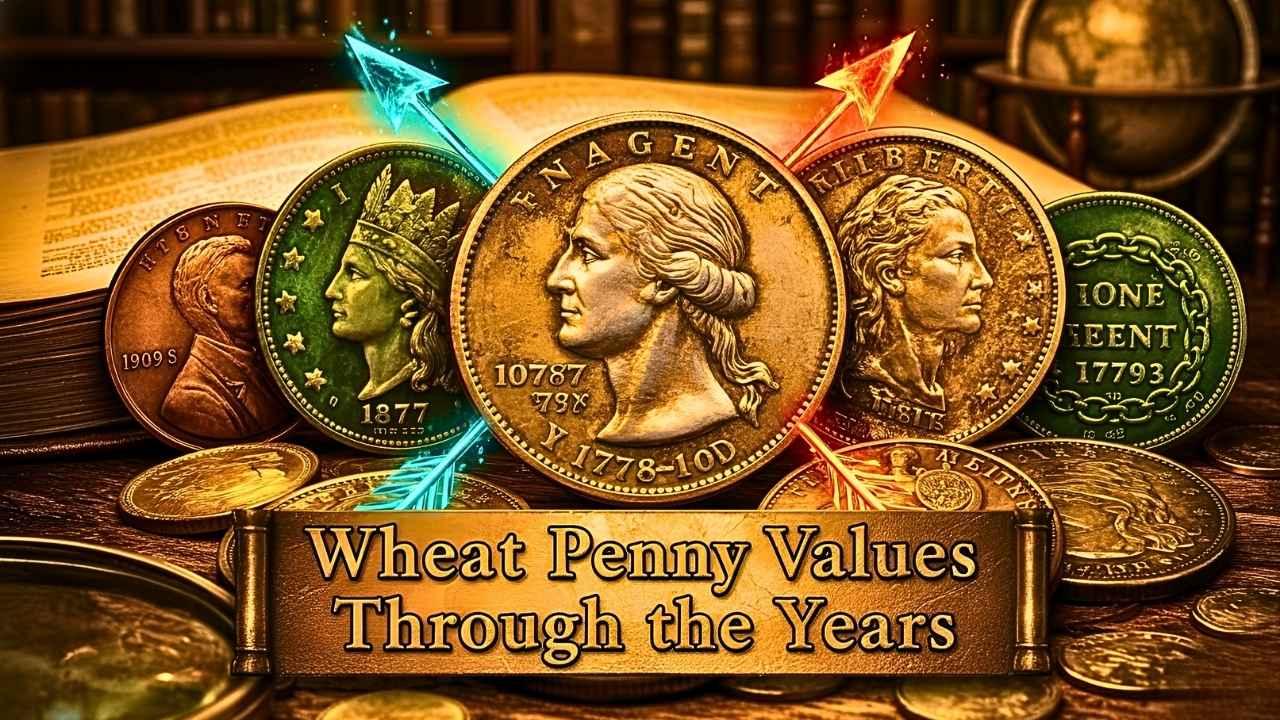
Wheat Penny Values Through the Years: The Lincoln Wheat Penny, first minted in 1909, is one of the most iconic coins in American numismatics. Designed by Victor David Brenner, the coin features Abraham Lincoln on the obverse and two wheat stalks on the reverse. For decades, these pennies circulated widely across the United States, becoming a familiar part of everyday life. While most Wheat Pennies are worth only a few cents above face value, certain rare varieties have achieved extraordinary values. Tracking Wheat Penny values through the years provides collectors with a complete guide to understanding their history, rarity, and potential worth.
The Early Years of Wheat Pennies
When the Wheat Penny was introduced in 1909, it marked the first time a U.S. coin featured a real person rather than a symbolic figure. The initial release included the famous 1909-S VDB variety, which carried the initials of designer Victor David Brenner prominently on the reverse. Public criticism led to the removal of the initials later that year, making the 1909-S VDB one of the most collectible coins in the series. With only 484,000 minted, its value has steadily increased over time, often reaching thousands of dollars in high grades.
Wheat Pennies in the 1910s
The 1910s saw steady production of Wheat Pennies, with mintages varying from year to year. Coins from the Denver and San Francisco mints are generally scarcer than those from Philadelphia. The 1914-D Penny is one of the most famous rarities from this decade, with a mintage of just over one million. In circulated condition, it can be worth hundreds of dollars, while high-grade examples command thousands. Collectors prize these early issues for their historical significance and relative scarcity.
Wheat Pennies in the 1920s
The 1920s produced several notable Wheat Pennies, including the 1922 No D variety. That year, all pennies were struck at the Denver Mint, but some coins were produced with a weak or missing “D” mint mark. This error created one of the most sought-after varieties in the series. In high grades, the 1922 No D Penny can be worth tens of thousands of dollars. Other coins from the 1920s are generally more common, but condition plays a major role in determining value.
Wheat Pennies in the 1930s
The 1930s saw continued production of Wheat Pennies, with mintages increasing during the decade. While most coins from this era are common, certain issues stand out. The 1931-S Penny, with a mintage of just under one million, is one of the scarcer coins from the decade. Collectors prize it for its low mintage and historical context during the Great Depression. Values for the 1931-S have steadily increased, especially in high grades.
Wheat Pennies in the 1940s
The 1940s produced some of the most famous rarities in the Wheat Penny series. During World War II, the Mint switched from copper to zinc-coated steel in 1943 to conserve copper for the war effort. However, a small number of 1943 pennies were mistakenly struck in copper. These coins are extremely rare, with only a few dozen known to exist. In pristine condition, a 1943 Copper Penny has sold for hundreds of thousands of dollars. Another wartime rarity is the 1944 Steel Penny, created when leftover steel planchets were accidentally used. These coins are also highly prized by collectors.
Wheat Pennies in the 1950s
The 1950s produced large numbers of Wheat Pennies, making most coins from this decade common. However, the 1955 Doubled Die Penny stands out as one of the most famous error coins in American history. On this coin, doubling is visible in the inscriptions, particularly in the words “LIBERTY” and “IN GOD WE TRUST.” Collectors prize these coins for their uniqueness, and values can soar depending on condition. The 1955 Doubled Die remains one of the most recognizable error coins in the series.
Wheat Pennies in the 1960s
By the 1960s, the Wheat Penny was nearing the end of its run. Production continued until 1958, when the reverse design was changed to feature the Lincoln Memorial. Coins from the late 1950s are generally common, but collectors still seek them to complete sets. The transition from Wheat Pennies to Memorial Pennies marked the end of an era in American coinage. Values for late Wheat Pennies are modest, but pristine examples can still command premiums.

How Condition Affects Value
Condition is critical in determining the value of Wheat Pennies. Coins graded at Mint State levels, particularly MS65 or higher, are worth significantly more than circulated examples. Professional grading services assign numerical scores to coins, providing collectors with confidence in their purchases. High-grade examples of rare Wheat Pennies consistently command premiums, with values reaching into the hundreds of thousands for the most famous varieties. Even common Wheat Pennies can be worth several dollars in pristine condition.
Collector Demand and Market Trends
Collector demand has played a major role in shaping the values of Wheat Pennies. Error coins, especially those with unusual compositions or missing mint marks, have always fascinated collectors. Their uniqueness and scarcity create intense competition at auctions. Market trends show that values for rare Wheat Pennies have steadily increased over time, reflecting both their rarity and the growing interest in numismatics. For collectors, investing in Wheat Pennies has proven to be both financially rewarding and historically significant.

Rare Varieties Still Hidden in Circulation
Despite their rarity, some valuable Wheat Pennies may still be hidden in circulation. Coins can remain in jars, drawers, or old collections for decades before being rediscovered. Sharp-eyed collectors occasionally find rare varieties in rolls of pennies or inherited coin collections. The possibility of uncovering a valuable coin in everyday change adds excitement to the hobby and keeps collectors searching. Stories of such discoveries continue to inspire new generations of numismatists.
The Legacy of Wheat Pennies
The Lincoln Wheat Penny represents more than just monetary value. It embodies history, artistry, and the thrill of discovery. From the famous 1909-S VDB to the legendary 1943 Copper Penny, these coins highlight the richness of American numismatic history. Their legacy continues to inspire collectors and remind us that even the smallest coins can carry immense significance. The pursuit of rare Wheat Pennies remains one of the most captivating aspects of coin collecting.

Conclusion
Wheat Pennies may seem ordinary at first glance, but a handful of ultra-rare examples have become treasures worth hundreds of thousands of dollars. The 1909-S VDB, 1914-D, 1922 No D, 1931-S, 1943 Copper, 1944 Steel, and 1955 Doubled Die stand out as legendary coins that collectors should watch closely. Their rarity, condition, and historical context have made them highly valuable, with auction prices reaching extraordinary levels. For collectors, these coins represent the pinnacle of numismatic achievement. By learning how to identify them and understanding the factors that drive their value, enthusiasts can appreciate the depth and excitement of the Wheat Penny series. The pursuit of these rare coins continues to captivate collectors, ensuring their place in the history of American coinage.