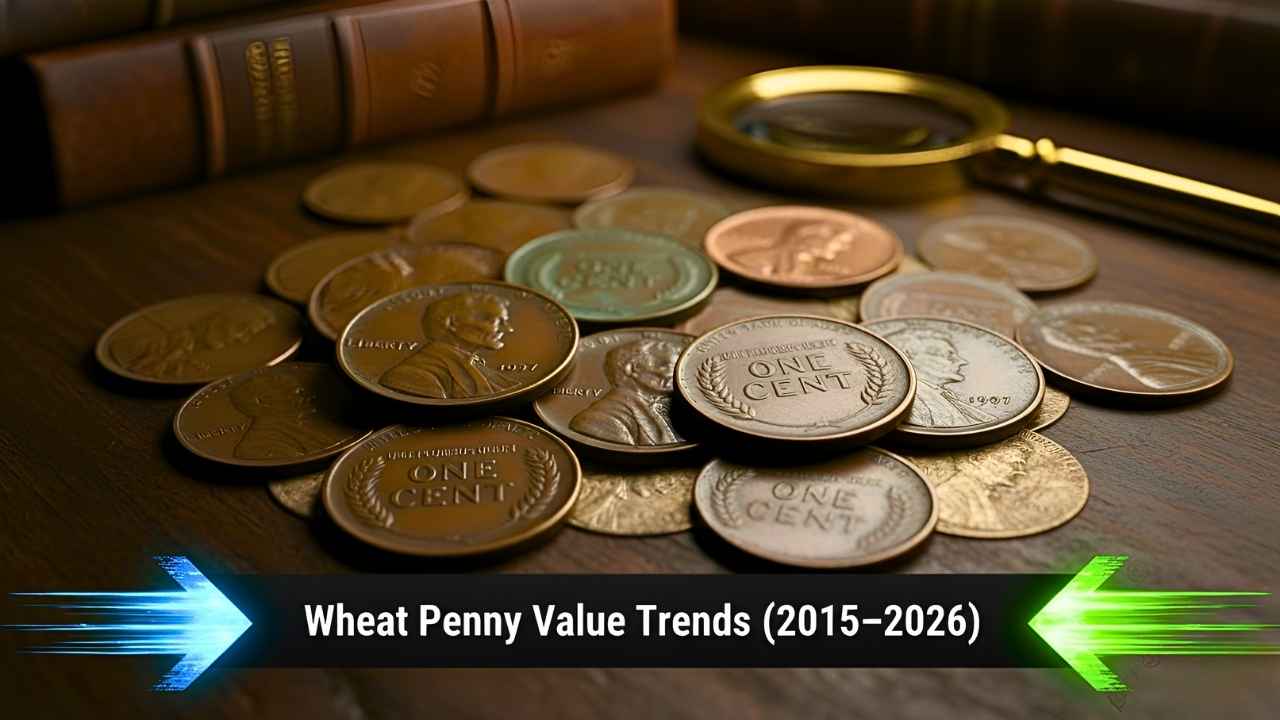
Wheat Penny Value Trends: The Lincoln Wheat Penny, minted from 1909 to 1958, remains one of the most beloved coins among collectors. Its design, featuring Abraham Lincoln on the front and two wheat stalks on the reverse, symbolizes prosperity and has become iconic in American numismatics. While most Wheat Pennies are common and worth only a few cents, certain rare dates and mint errors have achieved remarkable value. Over the past decade, interest in Wheat Pennies has grown steadily, and their market trends from 2015 to 2026 reveal fascinating insights for collectors.
Value Trends From 2015 To 2020
Between 2015 and 2020, Wheat Pennies experienced a noticeable increase in demand. Collectors began to pay closer attention to rare varieties such as the 1909-S VDB, the 1914-D, and the 1922 No D penny. Auction records during this period showed steady growth, with high-grade examples reaching impressive prices. The 1943 bronze penny, one of the most famous mint errors, continued to capture headlines with valuations in the hundreds of thousands of dollars. For everyday collectors, even common Wheat Pennies in uncirculated condition saw modest appreciation, making them attractive entry points into coin collecting.

The Impact Of Online Marketplaces
The rise of online marketplaces during this period also played a significant role in shaping value trends. Platforms allowed collectors to buy, sell, and trade coins more easily than ever before. This accessibility expanded the collector base and increased competition for rare pieces. As a result, prices for key dates and mint errors climbed steadily. The transparency of online auctions also helped establish clearer benchmarks for value, giving collectors more confidence in their purchases.
Value Trends From 2021 To 2023
The years 2021 to 2023 marked a period of heightened interest in numismatics overall. Economic uncertainty and the search for alternative investments drove many people toward tangible assets like coins. Wheat Pennies benefited from this trend, with rare varieties achieving record-breaking prices at major auctions. The 1909-S VDB penny in high grades consistently sold for thousands of dollars, while the 1914-D penny saw similar appreciation. Even mid-grade examples of these coins became more valuable, reflecting the broadening interest among collectors.

The Role Of Historical Significance
Collectors often emphasize the historical significance of Wheat Pennies when assessing their value. Coins minted during wartime, such as the steel pennies of 1943, hold special appeal. Although most steel pennies are common, pristine examples in uncirculated condition have become increasingly desirable. The story behind these coins, tied to World War II and the nation’s resource conservation efforts, adds depth to their appeal. Historical context continues to be a driving force behind value trends, reminding collectors that coins are more than currency; they are artifacts of history.
Value Trends From 2024 To 2026
Looking at the most recent years, from 2024 to 2026, Wheat Pennies have maintained strong momentum. Auction houses report consistent demand for rare varieties, and prices for high-grade coins remain robust. The 1943 bronze penny continues to be a headline-grabber, with valuations surpassing half a million dollars. Meanwhile, collectors have shown growing interest in error coins and varieties, such as doubled dies and repunched mint marks. These coins, once overlooked, now command significant premiums. Common Wheat Pennies in circulated condition remain affordable, but uncirculated examples have steadily appreciated, making them attractive for long-term collectors.
Factors Influencing Value Trends
Several factors influence the value of Wheat Pennies. Rarity is the most obvious, with coins like the 1909-S VDB and 1943 bronze penny standing out. Condition also plays a critical role, as coins in higher grades command far greater prices. Market demand, shaped by collector interest and broader economic conditions, further drives trends. Finally, historical significance adds intangible value, making certain coins more appealing even if they are not the rarest. Together, these factors create a dynamic market that continues to evolve.
Tips For Collectors Watching Value Trends
For collectors interested in Wheat Pennies, understanding value trends is essential. Start by familiarizing yourself with key dates and varieties. Pay attention to auction records and market reports to stay informed about current prices. Consider investing in professional grading services to authenticate and evaluate your coins. Building relationships with reputable dealers and fellow collectors can also provide valuable insights. Most importantly, collect with passion. While financial value is important, the joy of discovering and preserving history is what makes coin collecting truly rewarding.
The Future Of Wheat Penny Collecting
As we look beyond 2026, the future of Wheat Penny collecting appears bright. Interest in numismatics continues to grow, fueled by both seasoned collectors and newcomers. The accessibility of online marketplaces ensures that coins remain within reach for a wide audience. Rare varieties will likely continue to appreciate, while common coins in high grades will remain attractive for entry-level collectors. The enduring legacy of the Lincoln Wheat Penny guarantees its place in the world of coin collecting for generations to come.
Final Thoughts
The value trends of Wheat Pennies from 2015 to 2026 highlight the dynamic nature of coin collecting. Rare varieties have achieved extraordinary prices, while even common coins have seen modest appreciation. Historical significance, rarity, condition, and market demand all play vital roles in shaping these trends. For collectors, the journey is about more than financial gain; it is about connecting with history and preserving artifacts that tell the story of America. Whether you are searching for a rare 1943 bronze penny or simply enjoying the beauty of a well-preserved Wheat Penny, the excitement of discovery remains timeless.