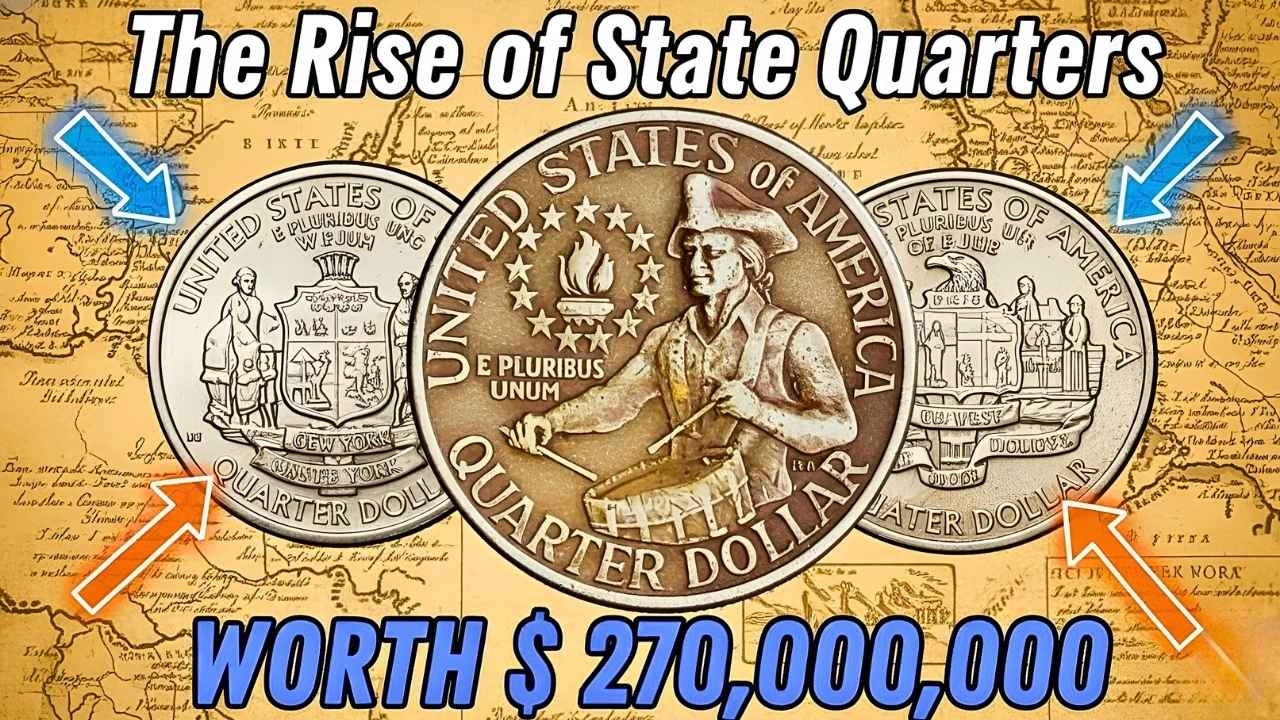
The Rise of State Quarters: In 1999, the United States Mint launched the State Quarters program, one of the most ambitious coin initiatives in American history. Over the course of eleven years, each state received its own unique quarter design, celebrating local history, culture, and landmarks. The program ran until 2008, with five new quarters released each year. By the time the final coin was issued in 2009, the program had produced fifty different designs, sparking widespread public interest and creating a new generation of coin collectors.
A National Phenomenon
The State Quarters program quickly became a cultural phenomenon. Millions of Americans began collecting the coins, often using maps or folders to track their progress. For many, it was the first time they had engaged with numismatics, turning everyday pocket change into a treasure hunt. The program also introduced children and families to the excitement of coin collecting, making it one of the most successful initiatives in the history of the U.S. Mint.

Early Collector Demand
When the program began, demand for State Quarters was immediate and intense. Banks reported long lines of customers eager to obtain the latest releases. Collectors sought pristine examples, often purchasing rolls or proof sets directly from the Mint. The excitement drove secondary market prices upward, with certain quarters selling for far more than their face value. The Delaware quarter, the first coin in the series, became especially popular, symbolizing the beginning of a new era in American coinage.
Value Changes Over Time
As the program progressed, values for State Quarters fluctuated. Early enthusiasm led to inflated prices, but as more coins entered circulation, values stabilized. By the mid-2000s, collectors began focusing on error coins and high-grade specimens rather than ordinary circulation pieces. Coins with minting errors, such as double strikes or off-center designs, commanded significant premiums. Meanwhile, proof sets and uncirculated rolls retained strong demand among serious collectors.
Rare Errors That Captured Attention
Some of the most valuable State Quarters are those with rare minting errors. The 2004 Wisconsin quarter with the extra leaf on the corn stalk is one of the most famous examples. Variations showing an extra leaf pointing up or down became highly sought after, with prices reaching thousands of dollars. Other notable errors include the 1999 Delaware quarter with the spitting horse design and the 2005 Kansas quarter with the “In God We Rust” inscription. These coins remain highlights of the series, demonstrating how mistakes can transform ordinary coins into extraordinary collectibles.
The Role of Silver Proof Sets
In addition to circulation coins, the Mint released special silver proof sets featuring State Quarters struck in 90 percent silver. These sets appealed to collectors seeking higher-quality coins with precious metal content. Over time, silver proof sets have appreciated in value, especially as silver prices increased. In 2026, these sets remain popular among collectors, offering both historical significance and intrinsic value.

Collector Demand in 2026
Eleven years after the conclusion of the State Quarters program, collector demand remains strong. While ordinary circulation coins are common, rare errors and high-grade specimens continue to command high prices. Collectors who assembled complete sets during the program’s run now find their collections valued significantly higher, particularly if the coins are in pristine condition. The program’s success has also inspired subsequent initiatives, such as the America the Beautiful Quarters, but the original State Quarters remain the most iconic.
The Economics of Rarity
The value of State Quarters is driven by the principles of supply and demand. Coins produced in large numbers are generally worth only their face value, but rare errors and limited editions are highly prized. Collectors compete fiercely for these coins, driving up prices in auctions and private sales. In this sense, State Quarters function much like fine art, where scarcity and cultural significance combine to create immense value.
Public Excitement and Speculation
Stories of valuable State Quarters continue to spark public imagination. People still check their pockets, purses, and piggy banks with renewed interest, hoping to stumble upon a rare specimen. Social media platforms are filled with discussions about error coins and collector finds. While the chances of discovering a valuable quarter in circulation are slim, the excitement lies in the possibility. Everyday transactions have become small adventures, where each coin could potentially hold extraordinary value.
Historical Parallels With Other Rare Coins
The State Quarters program is not the only source of valuable coins. History is filled with examples of coins that became incredibly valuable due to rarity or error. The 1933 Double Eagle gold coin, for instance, is one of the most famous coins in American history, with specimens selling for millions at auction. Similarly, the 1913 Liberty Head nickel has fascinated collectors for decades. The rare State Quarters of 2026 now join this elite group, adding a new chapter to the story of numismatics.
The Human Element of Discovery
What makes the story of State Quarters so compelling is the human element. The idea that someone could unknowingly carry a treasure in their pocket highlights the unpredictability of life. It reminds us that extraordinary things can be hidden in plain sight, waiting to be discovered. This sense of wonder is what keeps the world of numismatics alive and thriving, as collectors and enthusiasts continue to search for the next great find.
Tips for Identifying Valuable State Quarters
Collectors often look for specific features when identifying valuable State Quarters. These include mint marks, unusual compositions, and signs of minting errors. Coins struck with unique flaws or preserved in uncirculated condition are especially prized. Condition plays a major role, with pristine coins fetching higher prices. For those hoping to find a rare State Quarter, careful examination and knowledge of coin features are essential.
The Future of Coin Collecting
The rise of State Quarters has reinvigorated interest in coin collecting. Younger generations, who may not have considered numismatics before, are now intrigued by the possibility of finding rare coins. This renewed enthusiasm could lead to a resurgence in the hobby, ensuring that the legacy of coin collecting continues. As technology advances, tools for authentication and valuation will become more sophisticated, making it easier to identify rare coins and protect collectors from fraud.
Conclusion
The rise of State Quarters over eleven years represents more than just a coin program. It is a story of history, rarity, and the enduring fascination with hidden treasures. Whether or not these coins are ever found in circulation, their stories have already captured the imagination of millions. They remind us that even in the most ordinary objects, extraordinary value can exist. For collectors and dreamers alike, the State Quarters stand as a testament to the magic of discovery and the timeless allure of rare treasures.