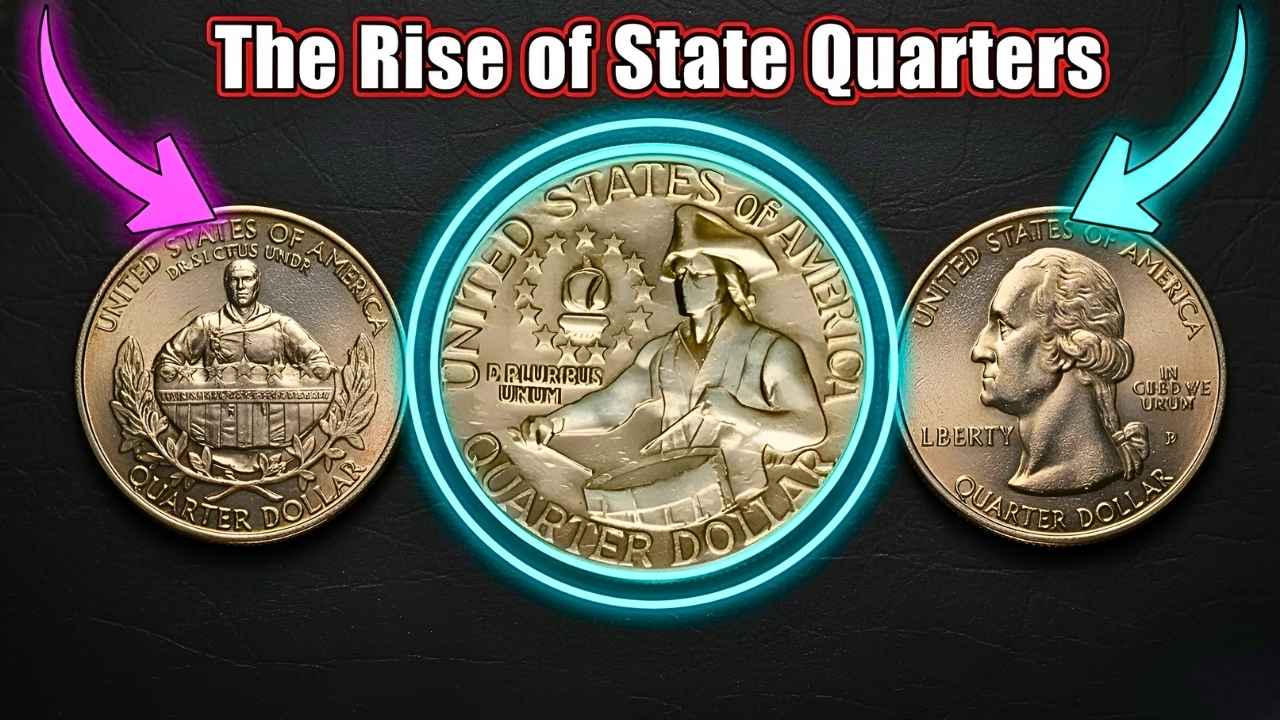
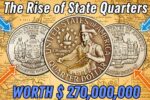
The Rise of State Quarters: In 1999 the United States Mint launched one of the most ambitious coin programs in American history. The State Quarters Program was designed to honor each of the fifty states with a unique reverse design on the Washington Quarter. Over the course of eleven years, from 1999 to 2008, millions of Americans became collectors almost overnight. The program not only sparked interest in numismatics but also created a fascinating market for these coins. Tracking the value changes of state quarters over more than a decade reveals how cultural enthusiasm, rarity, and condition have shaped their place in coin collecting.
The Launch and Early Excitement
When the first quarters were released in 1999 featuring Delaware, Pennsylvania, New Jersey, Georgia, and Connecticut, the excitement was immediate. People lined up at banks to get rolls of the new coins. Families began collecting quarters in specially designed maps and albums. The novelty of seeing new designs in everyday change created a sense of discovery. Early on, certain quarters were hoarded, and speculation began about which issues might become valuable in the future.
Factors Influencing Value
The value of state quarters has been influenced by several key factors. Mintage numbers play a significant role. Quarters produced in lower quantities are naturally scarcer and more desirable. Minting errors, such as doubled dies or off-center strikes, have also created rare varieties that command high prices. Condition is another critical factor. Coins preserved in Mint State condition, especially those graded MS65 or higher, are worth far more than circulated examples. Finally, collector demand has shaped the market, with certain states proving more popular due to their designs or historical significance.
The Role of Silver Proof Sets
In addition to circulation strikes, the Mint produced proof sets, including special silver proof quarters. These coins were struck in 90 percent silver and sold directly to collectors. Silver proof state quarters have consistently held higher values due to their precious metal content and superior strike quality. Over the years, these sets have become a cornerstone for collectors who wanted pristine examples of each design.
Early Value Trends
During the first few years of the program, values for certain quarters rose quickly. The 1999 Delaware quarter, featuring Caesar Rodney on horseback, became a symbol of the program’s success. Collectors speculated that first-year issues would always be more valuable, and prices reflected that enthusiasm. Similarly, the 2001 Kentucky quarter, with its depiction of a thoroughbred racehorse, attracted strong interest. However, as millions of coins entered circulation, values for most issues stabilized at modest levels.
The Impact of Low Mintage Quarters
Some state quarters stand out because of their relatively low mintages. The 2008 Oklahoma quarter, for example, had fewer coins produced compared to earlier years. Collectors quickly recognized its scarcity, and values rose accordingly. Other low mintage issues, such as the 2003 Alabama quarter, also became favorites among collectors. Tracking these coins over eleven years shows that scarcity consistently drives higher values.
Error Varieties and Their Influence
Error coins have always fascinated collectors, and the State Quarters Program produced its share of notable mistakes. The 2004 Wisconsin quarter is perhaps the most famous example. Some coins were struck with an extra leaf on the ear of corn, creating the “extra leaf” variety. These coins became instant rarities, with values climbing into the hundreds and even thousands of dollars depending on condition. Such errors highlight how unexpected variations can dramatically influence value trends.
The Role of Condition and Grading
Condition has remained one of the most important factors in determining value. Coins pulled directly from mint rolls or proof sets and preserved carefully often grade at Mint State levels. Professional grading services have certified thousands of state quarters, and high-grade examples consistently command premiums. Over eleven years, the difference between a circulated coin worth face value and a pristine MS67 example worth several hundred dollars has been striking.
Collector Demand and Cultural Appeal
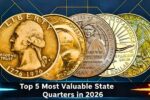
Beyond rarity and condition, collector demand has played a major role in shaping values. Certain designs resonated more strongly with the public. The 2000 South Carolina quarter, featuring the palmetto tree, became a favorite in the Southeast. The 2005 California quarter, with John Muir and a soaring condor, appealed to nature enthusiasts. Tracking values shows that coins with strong cultural or regional appeal often maintained higher demand and stronger prices.
The Market After the Program Ended
When the program concluded in 2008 with the release of the Hawaii quarter, collectors reflected on the journey. By then, millions of Americans had assembled complete sets. Values for most quarters stabilized, with common circulated examples worth little more than face value. However, rare varieties, low mintage issues, and high-grade coins continued to appreciate. The end of the program also created nostalgia, which helped sustain interest in state quarters as a collectible series.

Long Term Value Changes
Over eleven years, the value changes of state quarters reveal important lessons about coin collecting. Initial excitement often inflated prices, but long-term trends favored coins with genuine scarcity or exceptional condition. Error varieties like the Wisconsin extra leaf quarter maintained strong premiums. Silver proof sets held their value due to intrinsic metal content. Meanwhile, most circulated coins remained common and inexpensive, reminding collectors that rarity is the true driver of value.
The Legacy of the State Quarters Program
The State Quarters Program left a lasting legacy in American numismatics. It introduced millions of people to coin collecting, created a surge of interest in U.S. Mint products, and produced a series that remains one of the most popular in history. Tracking value changes over eleven years shows how enthusiasm, rarity, and condition intersect to shape the market. For many collectors, the program was not just about money but about the joy of discovery and the pride of completing a set.
Conclusion
The rise of state quarters and their value changes over eleven years tell a story of excitement, speculation, and enduring interest. While most coins remain common, certain issues have proven to be genuine treasures. From low mintage quarters to famous error varieties, the program produced coins that continue to captivate collectors. The State Quarters Program demonstrated how a simple idea could transform everyday change into a national phenomenon. Its legacy endures, reminding us that even the smallest coins can carry immense historical and cultural value.