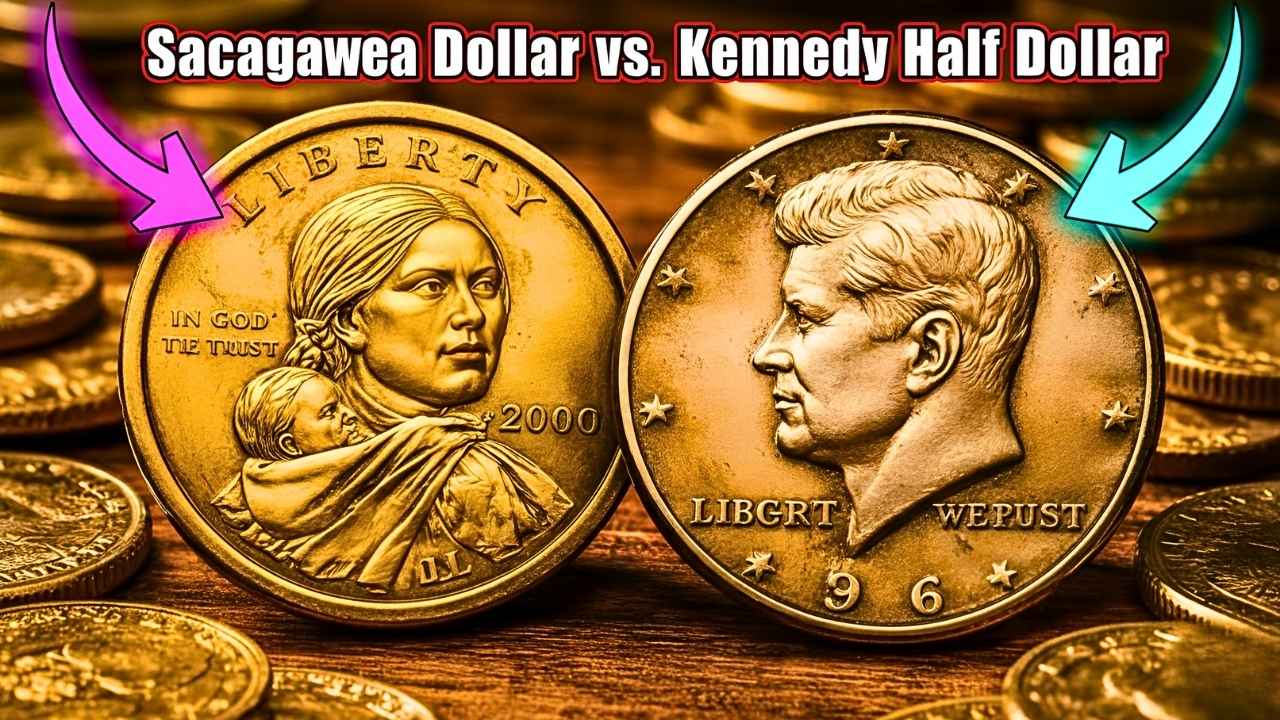
Sacagawea Dollar vs. Kennedy Half Dollar: The Sacagawea Dollar was first introduced in the year 2000 as part of an effort to create a new golden-colored coin for circulation in the United States. Designed to honor Sacagawea, the Shoshone woman who played a vital role in guiding the Lewis and Clark expedition, the coin quickly became a symbol of courage and contribution. The obverse features her portrait carrying her infant son, Jean Baptiste, while the reverse originally displayed a soaring eagle. Over time, the reverse design has changed to highlight Native American contributions to the nation, but the coin has always carried the name Sacagawea Dollar.
The Origins Of The Kennedy Half Dollar
The Kennedy Half Dollar was introduced in 1964, just months after the assassination of President John F Kennedy. It was designed as a tribute to the late president and quickly became one of the most popular coins in American history. The obverse features Kennedy’s profile, while the reverse displays the presidential coat of arms. Initially struck in 90 percent silver, the coin later transitioned to copper-nickel clad compositions. The Kennedy Half Dollar remains a symbol of national pride and remembrance.

Historical Significance Of Each Coin
Both coins carry deep historical meaning. The Sacagawea Dollar honors the contributions of Native Americans and highlights the role of Sacagawea in one of the most important expeditions in American history. The Kennedy Half Dollar, on the other hand, serves as a memorial to a beloved president whose leadership and vision left a lasting impact on the nation. Collectors often value these coins not only for their monetary worth but also for the stories they tell about American history.
Design And Aesthetic Appeal
The Sacagawea Dollar is known for its golden color and distinctive design. The portrait of Sacagawea with her child conveys strength and resilience, while the reverse designs over the years have celebrated Native American heritage. The Kennedy Half Dollar, with its bold profile of Kennedy and the detailed presidential seal, carries a sense of dignity and authority. Both coins are visually striking, but their appeal depends on the collector’s personal preference for design and symbolism.

Availability And Circulation
The Sacagawea Dollar was produced for circulation but never gained widespread popularity in everyday transactions. Many people preferred paper currency, and as a result, the coin often ended up in collections rather than pockets. The Kennedy Half Dollar, while initially popular, also saw limited use in daily commerce. Today, both coins are more commonly found in collector sets and special issues than in circulation. Their availability depends largely on mint production and collector demand.
Value And Investment Potential
When considering value, both coins offer unique opportunities. The Sacagawea Dollar includes rare varieties such as the Cheerios Dollar, which features a prototype reverse design and can be worth thousands of dollars. The Kennedy Half Dollar also has valuable issues, particularly the 1964 silver version and certain minting errors. Collectors often weigh the rarity, condition, and historical significance of each coin when assessing investment potential. While neither coin is guaranteed to appreciate dramatically, both hold steady appeal in the numismatic market.
Collecting Experience
The experience of collecting Sacagawea Dollars differs from that of Kennedy Half Dollars. Sacagawea Dollars often attract collectors interested in Native American history and modern coinage. Kennedy Half Dollars appeal to those who value presidential memorabilia and mid twentieth century coinage. Both coins offer a rewarding collecting journey, with opportunities to explore varieties, mint marks, and special issues. The choice depends on the collector’s interests and goals.
Practical Considerations For Choosing
When deciding between the Sacagawea Dollar and the Kennedy Half Dollar, practical considerations come into play. The Sacagawea Dollar is smaller and lighter, making it easier to store and handle. The Kennedy Half Dollar is larger and heavier, offering a more substantial feel. Collectors may also consider the availability of proof sets, commemorative issues, and the ease of finding coins in high grades. Ultimately, the decision rests on personal preference and collecting strategy.

Cultural Impact Of Each Coin
The Sacagawea Dollar represents a broader effort to recognize Native American contributions and to diversify the imagery on United States coinage. Its introduction marked a step toward inclusivity and acknowledgment of overlooked historical figures. The Kennedy Half Dollar reflects the nation’s collective mourning and admiration for a president whose life was cut short. Both coins carry cultural weight, reminding collectors of the values and moments that shaped the nation.
Final Thoughts
Choosing between the Sacagawea Dollar and the Kennedy Half Dollar is not simply a matter of value or rarity. It is about connecting with history, appreciating design, and finding meaning in the coins you collect. The Sacagawea Dollar offers a tribute to resilience and heritage, while the Kennedy Half Dollar stands as a memorial to leadership and legacy. Whether you choose one or both, the journey of collecting these coins is a way to preserve history and celebrate the stories that define America.