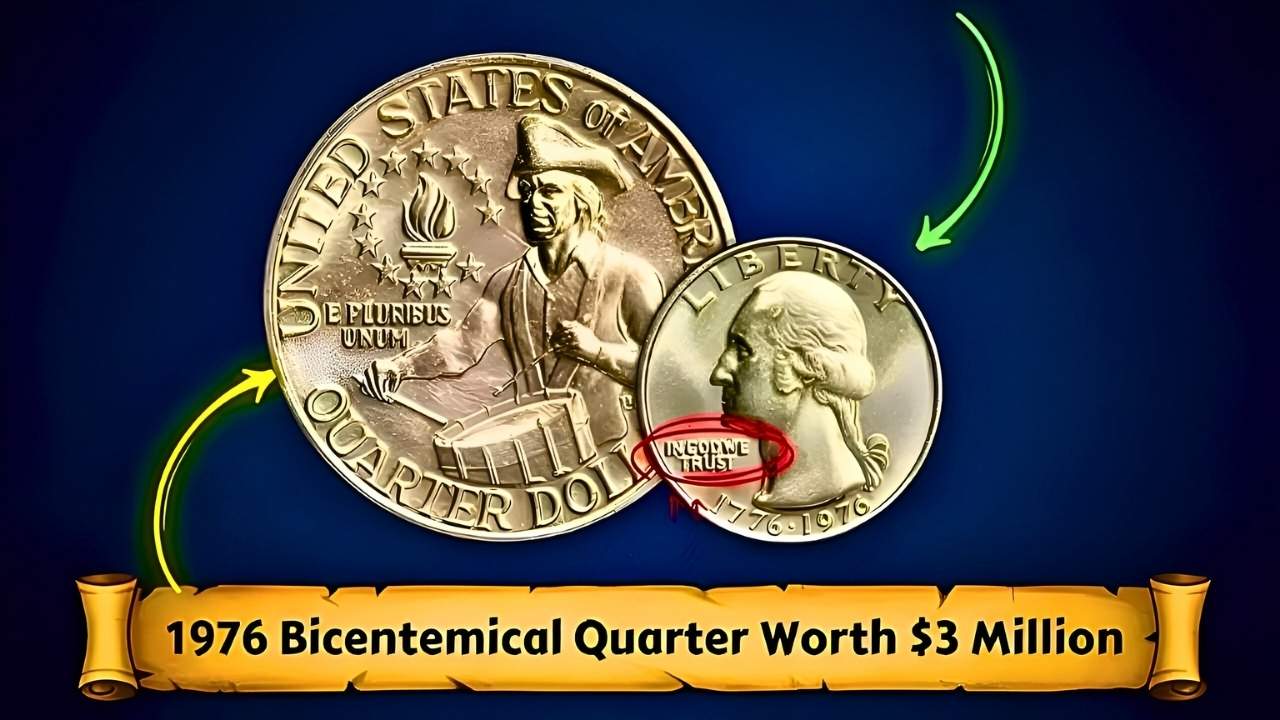
1976 Bicentennial Quarter Worth $4 Million: Coins often serve as more than just currency. They are miniature pieces of history, carrying the stories of the times in which they were minted. The 1976 Bicentennial Quarter is one such coin, created to celebrate the 200th anniversary of American independence. While most of these quarters are worth only twenty five cents, certain rare varieties have become legendary among collectors. Some reports suggest that specific versions of the Bicentennial Quarter can be valued at millions, with one example rumored to be worth as much as four million dollars. This extraordinary valuation has sparked curiosity and excitement in the numismatic community.
The Origins of the Bicentennial Quarter
In 1976, the United States Mint released a special quarter to commemorate the nation’s bicentennial. The coin featured a unique reverse design created by Jack L. Ahr, depicting a colonial drummer with a torch surrounded by thirteen stars. The obverse retained the familiar portrait of George Washington. These coins were minted in large numbers and circulated widely, making them a common sight in pockets and purses across America. Yet within this massive production run, certain rare varieties emerged that would later become highly valuable.
Why Some Bicentennial Quarters Are Valuable
The value of a coin is determined by several factors including rarity, condition, and historical significance. For the Bicentennial Quarter, rare minting errors and special proof issues have elevated certain examples far beyond their face value. Coins struck in silver, coins with double die errors, or coins preserved in pristine condition can command high prices among collectors. The rumored four million dollar Bicentennial Quarter is believed to be one such extraordinary specimen, combining rarity with historical importance.
The Role of Minting Errors
Minting errors are a key factor in creating valuable coins. Errors such as double strikes, off center prints, or the use of incorrect dies can transform an ordinary coin into a rare treasure. In the case of the Bicentennial Quarter, certain error varieties have become highly sought after. Collectors carefully examine coins for signs of these anomalies, knowing that even a small mistake can dramatically increase value. The possibility of finding such a coin in circulation adds excitement to the hobby.
Silver Bicentennial Quarters
Another source of rarity lies in the silver versions of the Bicentennial Quarter. While most were struck in copper nickel, the Mint also produced limited numbers in 40 percent silver for collectors. These silver quarters were often sold in special sets and are more valuable than their copper nickel counterparts. High grade silver Bicentennial Quarters can fetch hundreds or even thousands of dollars, depending on condition. For collectors, they represent a tangible link to the nation’s bicentennial celebration.
The Collector’s Perspective
For coin collectors, the thrill lies in the hunt. The idea that a Bicentennial Quarter worth millions could still be circulating adds excitement to everyday transactions. Collectors often spend years searching for specific coins, driven by passion and the hope of uncovering hidden treasures. The Bicentennial Quarter has become a symbol of this pursuit, representing both the potential for discovery and the enduring fascination with numismatics.

Historical Significance
Beyond its monetary value, the Bicentennial Quarter carries historical weight. It reflects the spirit of 1976, a year when Americans celebrated two centuries of independence. The coin’s design captures the essence of patriotism and national pride. For collectors, owning a Bicentennial Quarter is not just about wealth but about preserving a piece of history. It serves as a reminder of the nation’s journey and the milestones that shaped its identity.
The Impact on Everyday Life
The story of the four million dollar Bicentennial Quarter has sparked curiosity among ordinary people. Many have begun to look more closely at their change, wondering if they might stumble upon a hidden treasure. While the chances are slim, the possibility adds a sense of wonder to daily transactions. It reminds us that even the smallest objects can hold great significance, turning routine moments into opportunities for discovery.

Lessons from the Bicentennial Quarter
The tale of the rare Bicentennial Quarter offers several lessons. First, it shows the importance of paying attention to detail. What appears ordinary may in fact be extraordinary. Second, it highlights the value of history and how objects can carry stories across generations. Finally, it demonstrates the unpredictability of value, showing that wealth can sometimes be found in unexpected places. These lessons resonate not only with collectors but also with anyone who appreciates the hidden potential in everyday life.
The Future of Rare Coins
As technology advances, the chances of minting errors decrease. Modern processes are designed to ensure precision and consistency. Yet the fascination with rare coins continues. Collectors will always seek out anomalies, and stories like that of the Bicentennial Quarter will inspire future generations. The coin’s value is not just in its rarity but in the narrative it carries, a narrative that blends history, mystery, and human curiosity. Rare coins will remain symbols of discovery, reminding us that treasures can still be found in the most unexpected places.

Conclusion
The 1976 Bicentennial Quarter rumored to be worth four million dollars is more than a coin. It is a symbol of history, rarity, and the unexpected treasures that can be found in everyday life. Its story reminds us that value is not always obvious and that even the smallest objects can hold immense significance. Whether or not this quarter is truly worth millions, its legend continues to inspire collectors and ordinary people alike, proving that sometimes fortune truly does lie in the palm of your hand.