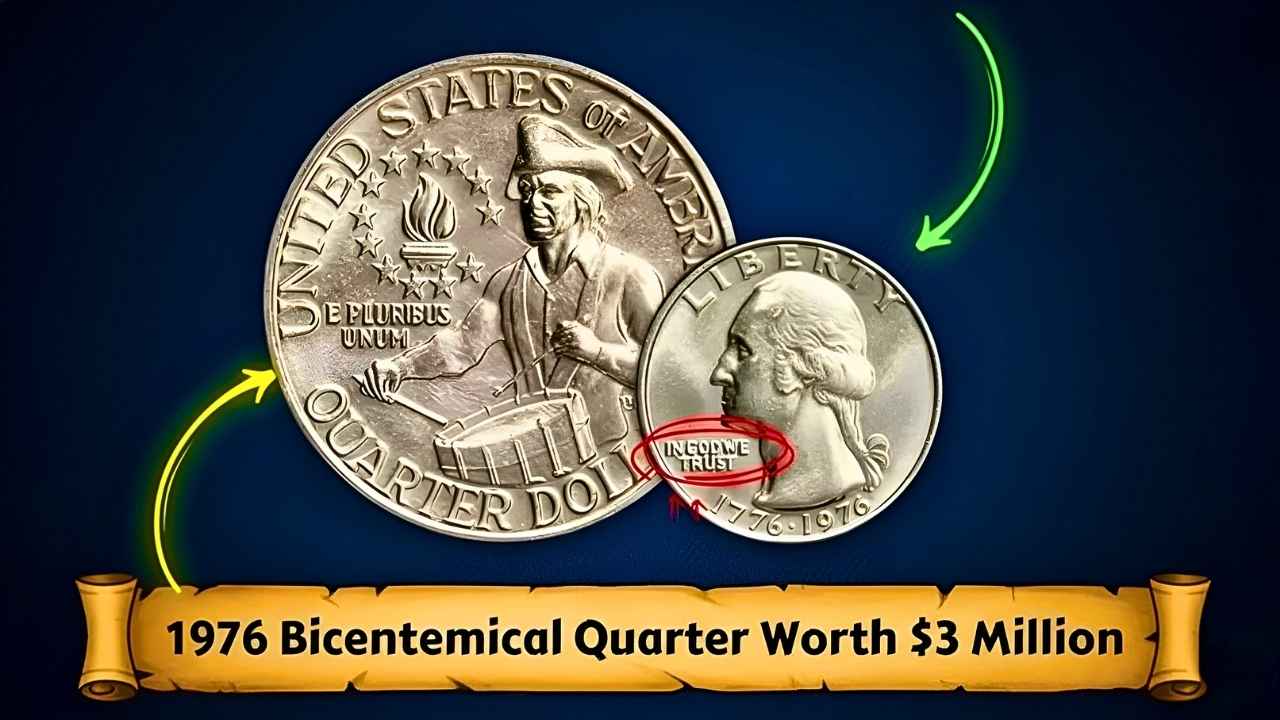
1976 Bicentennial Quarter Worth $3 Million: In 1976, the United States celebrated its 200th anniversary of independence, and the U.S. Mint marked the occasion by releasing special Bicentennial coins. Among them was the Bicentennial quarter, a coin that quickly became a symbol of patriotism and history. Featuring a unique reverse design with a colonial drummer and a torch surrounded by thirteen stars, the quarter was minted in large numbers to commemorate the nation’s bicentennial. While most of these coins are worth only their face value, certain rare varieties have become incredibly valuable, with one specimen reportedly valued at $3 million.
Why Some Bicentennial Quarters Are Worth Millions
The majority of Bicentennial quarters remain common, but a few rare examples stand out due to minting errors, unusual compositions, or pristine condition. Coins that were struck in limited numbers or contain unique flaws are highly sought after by collectors. The $3 million Bicentennial quarter is believed to be one of these rare specimens, possibly struck in silver or featuring a rare minting anomaly. Its rarity and historical significance have elevated its value far beyond ordinary circulation coins.
The Unique Design of the 1976 Quarter
The Bicentennial quarter is instantly recognizable due to its special reverse design. Instead of the traditional eagle, the coin features a colonial drummer boy designed by Jack L. Ahr. The obverse still carries George Washington’s portrait, but with the dual date 1776–1976 to mark the bicentennial. This design was only used for quarters minted in 1975 and 1976, making them distinct from other Washington quarters. The combination of patriotic imagery and limited production years adds to the coin’s appeal among collectors.
Minting Errors and Their Impact on Value
Minting errors are one of the primary reasons coins achieve extraordinary value. Errors can include double strikes, off-center designs, or the use of incorrect metals. These mistakes are rare because mints maintain strict quality control, but when they do occur, they create coins unlike any others. Collectors are willing to pay enormous sums for these anomalies. The $3 million Bicentennial quarter is believed to be one such error, making it a unique piece of history that continues to fascinate numismatists.
Silver Bicentennial Quarters
While most Bicentennial quarters were struck in copper-nickel, a limited number were minted in 40 percent silver for collectors. These silver quarters were sold in special sets and are more valuable than their copper-nickel counterparts. Although they are not typically worth millions, they can fetch higher prices depending on condition and rarity. The possibility that the $3 million quarter is a rare silver strike adds to its mystique and allure.
The Role of Collectors in Preserving History
Coin collectors play a vital role in uncovering and preserving rare coins. Their passion for detail and history often leads to discoveries that astonish the world. Collectors carefully examine coins for variations, mint marks, and signs of authenticity. Without their dedication, many rare coins would remain unnoticed. The Bicentennial quarter worth $3 million has become a symbol of the thrill of collecting, reminding enthusiasts that treasures can still be found in the most ordinary places.
Public Excitement and Speculation
News of a quarter worth millions still circulating has naturally stirred public imagination. People have begun checking their pockets, purses, and piggy banks with renewed interest. Social media platforms are filled with stories of individuals hoping to stumble upon the elusive coin. While the chances of finding it are slim, the excitement lies in the possibility. It has turned everyday transactions into small adventures, where each quarter could potentially hold extraordinary value.
Historical Parallels With Other Rare Coins
The Bicentennial quarter is not the first coin to achieve legendary status. History is filled with examples of coins that became incredibly valuable due to rarity or error. The 1933 Double Eagle gold coin, for instance, is one of the most famous coins in American history, with specimens selling for millions at auction. Similarly, the 1913 Liberty Head nickel has fascinated collectors for decades. The $3 million Bicentennial quarter now joins this elite group, adding a new chapter to the story of rare coins.

The Economics of Rarity
The value of rare coins is driven by the principles of supply and demand. When a coin is unique or extremely scarce, collectors compete fiercely to own it, driving up its price. The Bicentennial quarter’s reported value reflects not only its rarity but also the intense desire among collectors to possess a piece of history. In this sense, rare coins function much like fine art, where scarcity and cultural significance combine to create immense value.
The Human Element of Discovery
What makes the story of the $3 million Bicentennial quarter so compelling is the human element. The idea that someone could unknowingly carry such a treasure in their pocket highlights the unpredictability of life. It reminds us that extraordinary things can be hidden in plain sight, waiting to be discovered. This sense of wonder is what keeps the world of numismatics alive and thriving, as collectors and enthusiasts continue to search for the next great find.

Tips for Identifying Valuable Bicentennial Quarters
Collectors often look for specific features when identifying valuable Bicentennial quarters. These include mint marks, unusual compositions, and signs of minting errors. Coins struck in silver or with unique flaws are especially prized. Condition also plays a major role, with uncirculated coins fetching higher prices. For those hoping to find a rare Bicentennial quarter, careful examination and knowledge of coin features are essential.
The Future of Coin Collecting
The tale of the Bicentennial quarter has reinvigorated interest in coin collecting. Younger generations, who may not have considered numismatics before, are now intrigued by the possibility of finding rare coins. This renewed enthusiasm could lead to a resurgence in the hobby, ensuring that the legacy of coin collecting continues. As technology advances, tools for authentication and valuation will become more sophisticated, making it easier to identify rare coins and protect collectors from fraud.

Conclusion
The rare 1976 Bicentennial quarter worth $3 million is more than just a coin. It is a symbol of history, rarity, and the enduring fascination with hidden treasures. Whether or not the coin is ever found, its story has already captured the imagination of millions. It reminds us that even in the most ordinary objects, extraordinary value can exist. For collectors and dreamers alike, the Bicentennial quarter stands as a testament to the magic of discovery and the timeless allure of rare coins.