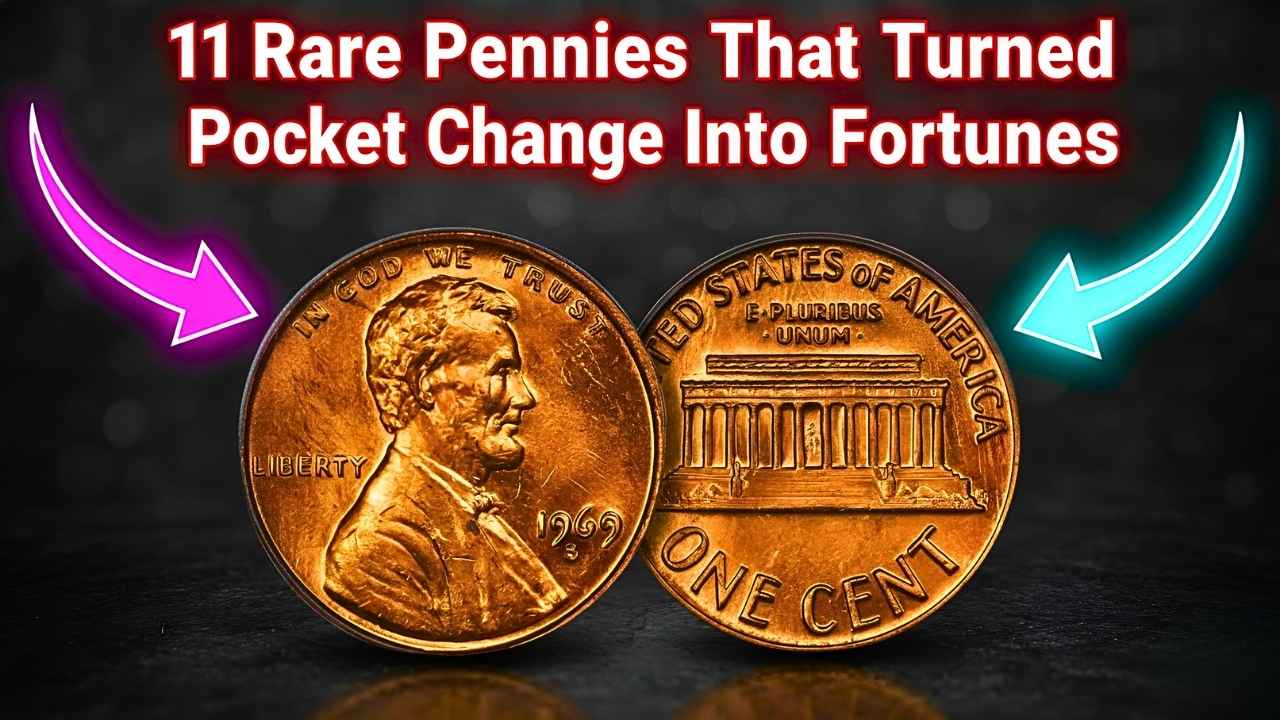
11 Rare Pennies That Turned Pocket Change Into Fortunes: Pennies may seem insignificant in everyday life, but for coin collectors they hold immense value. The Lincoln cent, introduced in 1909, has produced some of the most famous rarities in American numismatics. From minting errors to low mintage issues, certain pennies have transformed ordinary pocket change into extraordinary fortunes.
1909 S VDB Penny
The 1909 S VDB penny is one of the most iconic coins in American history. Designed by Victor David Brenner, the initials VDB were placed prominently on the reverse. Some critics objected, leading to a limited mintage before the initials were removed. With only a small number struck in San Francisco, this coin remains highly prized and can be worth thousands of dollars.
1914 D Penny
The 1914 D penny is another rarity that commands attention. Minted in Denver, it had a relatively low production compared to other years. High grade examples are especially valuable, with prices reaching tens of thousands of dollars. Collectors consider it one of the key dates in the Lincoln cent series.
1922 No D Penny
The 1922 No D penny is a fascinating minting error. Produced in Denver, some coins were struck without the D mint mark due to worn dies. These coins are rare and highly collectible, with values depending on condition. They highlight the importance of careful observation when examining coins.
1943 Bronze Penny
During World War II, copper was needed for military equipment, so the United States Mint produced pennies from steel coated with zinc. However, a few bronze planchets were mistakenly used, creating one of the most famous error coins in history. The 1943 bronze penny has sold for hundreds of thousands of dollars, turning pocket change into a fortune.
1944 Steel Penny
In 1944, the Mint returned to using copper for pennies, but a few steel planchets from the previous year were accidentally used. These 1944 steel pennies are extremely rare and valuable. Their scarcity makes them one of the most sought after coins among collectors.
1955 Doubled Die Penny
The 1955 doubled die penny is a striking error coin. The doubling is most noticeable on the inscriptions, creating a bold and unusual look. These coins quickly gained fame and remain popular among collectors. Depending on condition, they can be worth thousands of dollars.
1969 S Doubled Die Penny
Another famous doubled die variety is the 1969 S penny. The doubling is most visible on the inscriptions and Lincoln’s profile. Initially thought to be counterfeit, these coins were later confirmed as genuine. They are rare and highly valuable, with prices reaching impressive levels.
1972 Doubled Die Penny
The 1972 doubled die penny is another error that continues to intrigue collectors. The doubling is most noticeable on the inscriptions, creating a distinctive appearance. These coins are more common than the 1955 or 1969 S varieties but still command significant premiums.
1982 Small Date Copper Penny
In 1982, the Mint transitioned from copper to zinc planchets. During this change, both large date and small date varieties were produced. The 1982 small date copper penny is rare and valuable, as most pennies from that year were struck in zinc. Collectors prize these coins for their uniqueness.
1992 Close AM Penny
The 1992 close AM penny is a modern rarity. On most pennies, the letters A and M in America are spaced apart, but on this variety they are close together. These coins are rare and can be worth thousands of dollars, proving that even modern pennies can hold hidden treasures.
1999 Wide AM Penny
The 1999 wide AM penny is another modern variety. Unlike most pennies of that year, the letters A and M in America are spaced farther apart. These coins are rare and valuable, with collectors eager to add them to their collections.
Factors That Influence Value
The value of rare pennies depends on several factors. Rarity is the most obvious, with coins like the 1943 bronze penny standing out. Condition also plays a critical role, as coins in higher grades command far greater prices. Market demand, shaped by collector interest and broader economic conditions, further drives trends. Historical significance adds intangible value, making certain coins more appealing even if they are not the rarest.
Tips For Collectors
For collectors interested in rare pennies, understanding value trends is essential. Start by familiarizing yourself with key dates and varieties. Pay attention to auction records and market reports to stay informed about current prices. Consider investing in professional grading services to authenticate and evaluate your coins. Building relationships with reputable dealers and fellow collectors can also provide valuable insights. Most importantly, collect with passion. While financial value is important, the joy of discovering and preserving history is what makes coin collecting truly rewarding.
The Excitement Of The Hunt
Part of the appeal of coin collecting lies in the thrill of discovery. The idea that a penny worth thousands of dollars could be sitting unnoticed in a jar of spare change is exhilarating. Even if you never find a rare variety, the process of searching and learning can be deeply rewarding. Every coin has a story, and uncovering those stories can be just as satisfying as striking it rich.
Final Thoughts
The eleven rare pennies that turned pocket change into fortunes highlight the dynamic nature of coin collecting. Rare varieties have achieved extraordinary prices, while even common coins have seen modest appreciation. Historical significance, rarity, condition, and market demand all play vital roles in shaping these trends. For collectors, the journey is about more than financial gain; it is about connecting with history and preserving artifacts that tell the story of America. Whether you are searching for a rare doubled die penny or simply enjoying the beauty of a well preserved Lincoln cent, the excitement of discovery remains timeless.